The Quiet History Written in a Building’s Materials
Building materials history becomes easier to read when you compare walls, notice repairs and separate visible clues from guesses about a building’s past.
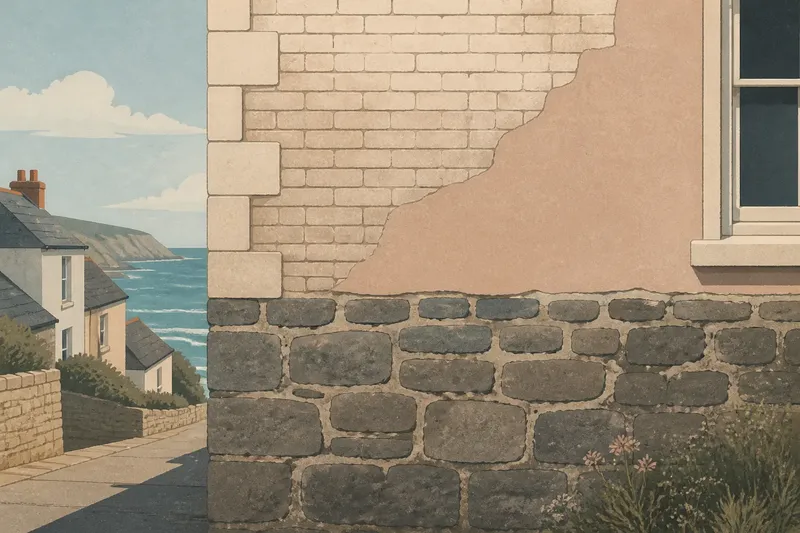
You pause beside a doorway in a coastal town: rough grey stone forms the lower wall, pale brick sits above it, and newer render hides part of the join. Building materials history begins with details like these. The contrast may suggest changes in craft or supply, but it cannot tell the whole story by itself.
Read what is visible before reaching for an explanation. A clear boundary invites comparison; a repaired façade calls for restraint; a building with additions is best understood in layers. Surfaces offer clues, not a complete record.
What can a change in material tell you?
Materials reflect choices made under particular conditions. A wall might use nearby stone because it was workable and accessible. Brick may appear where clay, fuel and skilled makers were available. Timber, lime render, slate and tile each require particular sources, transport, tools, knowledge and maintenance.
A change in material can point to a shift in supply or craft. It might mark a new building phase, a repair, a change in fashion or a practical response to weather. The boundary shows that something differs; the reason remains uncertain.
A building is a little like a coat with a replaced sleeve. The mismatch is easy to spot, but it does not reveal whether the change followed damage, wear or a change of taste. Buildings are less obliging than coats: later work can hide the seam, and several explanations may fit the same surface.
How should you read different kinds of façade?
Is the material change sharply defined?
If one storey is brick and another is stone, or a distinct band crosses the wall, compare the areas closely. Look at the bond, mortar joints, block sizes and corner finishes. These details may help distinguish a separate building phase from a decorative treatment.
The cautious reading is that the materials meet at a boundary, and the wall may have been built or altered in stages. Do not assign a date or cause from contrast alone. A material join is a lead, not a caption.
Is most of the surface covered or repaired?
When render, paint or replacement pointing dominates, the original materials may be hard to identify. Look instead at exposed edges around a doorway, a window reveal or a worn corner, where layers may be visible without disturbing anything.
Describe the finish you can see and note where it changes. A hidden stone or brick core remains unknown unless reliable documentation or expert inspection clarifies it. A smooth façade is not an invitation to guess what lies beneath.
Does the building have several additions?
Extensions, blocked openings and altered rooflines can leave seams in the masonry. Compare how materials meet at corners and around openings. An addition may use a different bond or mortar, while a repair may replace damaged units within the same wall.
Read the building in layers rather than forcing it into one neat story. Record which parts appear different and how they connect. If the join is unclear, leave the order open instead of arranging every change into a confident timeline.
Are you looking at an isolated building?
One façade shows what is present there, but offers little basis for calling a material local or unusual. Where accessible, compare nearby buildings of a similar type and note whether the same stone, brick, roof covering or finish recurs.
Repeated use may suggest a shared source or trade; a solitary material might have arrived for one particular commission. Neither pattern proves where the material came from. Comparison gives you a better question, not a certain answer.
What should you note before interpreting a wall?
Start with what is directly visible. Name the material only as specifically as you can support: stone rather than a particular quarry stone, brick rather than a named brick type. Note texture, colour, size, arrangement and the condition of the joints. These descriptions preserve detail without pretending that appearance identifies a source.
- Observe whether the lower wall of a neighbouring building uses the same material; if it does, treat the material as part of a local pattern, but if it does not, keep any claim about local use tentative.
- Check the mortar colour and joint shape; if they differ across a boundary, consider a separate phase, but if repointing is visible, do not use the mortar alone to order the work.
- Look at whether stone blocks are regular, roughly dressed or mixed in size; if the pattern changes across the wall, record a possible change in workmanship, but if it remains consistent, avoid inferring a new phase from stone alone.
- Observe whether brickwork repeats the same bond or changes around an opening; if the bond changes, compare other joins before proposing an addition, but if it does not, leave the phase uncertain.
- Check the roof covering and rainwater goods separately from the wall; if either appears different from the surrounding materials, note it as a possible later replacement, but if the junction is concealed, do not infer when it was installed.
- Look for patches, visible joins and blocked openings; if they interrupt the wall, record where they occur and compare their edges, but if later finishes hide the edges, describe only what remains visible.
Keep notes in two columns: observation and possible explanation. “Pale brick above dark stone” belongs in the first. “The upper floor may be a later addition” belongs in the second. The distinction makes it easier to revise an interpretation when another clue appears.
What can materials suggest about craft and supply?
Craft is visible in how a material has been worked and assembled. Tool marks, the regularity of blocks, brick bonds and finishes around openings can point towards particular skills or conventions. Maintenance may blur those traces, and a skilled repair may imitate older work. Treat workmanship as evidence of making, not proof of who made it or when.
Repetition and contrast across a place can suggest how materials reached buildings. Similar stone across a street might reflect convenient access, established transport or a shared building tradition. A different roof covering or brickwork style may signal changing availability, but it could also reflect an owner’s preference or a building’s purpose.
Materials respond differently to local weather. Stone can weather unevenly; timber may be painted or replaced; lime render can soften the appearance of a wall. These conditions tell you about exposure and care as much as original construction. A repaired surface records an ongoing relationship with a building, not merely its first form.
How can you keep an interpretation grounded?
Imagine a fictional inn with a stone ground floor, a brick upper storey and fresh render around one window. You note the contrast, then compare the building with nearby façades. The brickwork continues around the side wall, while the window patch does not. You record the upper section as a possible distinct phase and the patch as a repair; the exact dates and reasons remain unknown.
Leave the story open when surfaces are concealed, repairs have replaced much of the original work, or two explanations fit equally well. A change from stone to brick might reflect an extension, limited access to one material or a design choice. The façade alone may not settle the question.
If the building’s history matters beyond casual observation, consult a local architectural historian, conservation officer or building professional. For a traveller, it is often enough to distinguish what the wall shows from what it suggests. Building materials history becomes more useful when uncertainty belongs in the description, rather than being edited out.
On your next street, follow one junction between materials with your eyes around the corner. It may stop, continue or disappear beneath a later finish. Each outcome gives you a more grounded question to carry onward—and a reason to look at the next building.