Why a Town Square Feels Like the Centre
Why a town square feels like the centre depends on more than its location. Learn how its shape, civic features and everyday uses give it character.
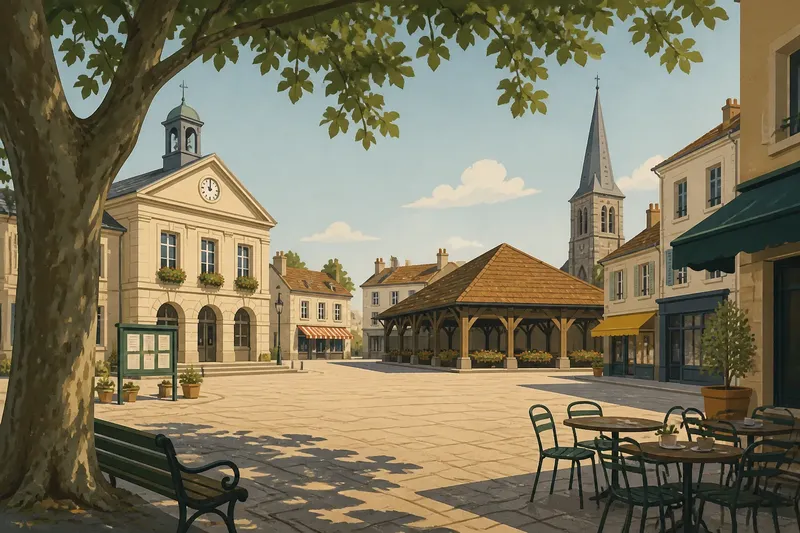
You step out of a narrow lane and find a square with no monument, just paving, café chairs and a plane tree casting shade. Yet it feels like the town’s centre. Why a town square feels like the centre is often a question of civic character: what the space accommodates, and what its buildings say about public life.
What gives a square its civic character?
A square feels important when its surroundings give it more than one role. A town hall, church, market hall or library can lend a public purpose; shops and cafés make the place part of an ordinary day. These uses may sit side by side without forming a grand composition. Town centres are rarely arranged as neatly as their postcards suggest.
The buildings matter, but so does the space between them. A broad, uncluttered area can host a market or gathering, while sheltered corners give people somewhere to stop without becoming the event. The square’s character comes from this balance between open ground and places that invite a closer look.
A simple analogy: a square can work like a shared kitchen table. Its centre remains available, while the edges provide the practical things that make staying there possible.
Which buildings change the way a square feels?
Look at the uses facing the square, not only at the most impressive façade. A town hall may make civic business visible; a church can mark a place of worship and ceremony. A market hall suggests exchange, while a row of everyday shops keeps the setting tied to routine. Their presence does not dictate how everyone uses the square, but it gives the space a recognisable frame.
Architecture can set a tone through proportion and detail. Arcades offer a covered edge; steps make a threshold; a clock or doorway can become a point of reference. A grand façade may command attention, while modest shopfronts make the square feel lived-in. Notice the contrast rather than assuming one style matters more.
Materials also shape the impression. Stone paving may look formal, while brick, timber or painted plaster can make the surrounding buildings feel more domestic. Repairs, signs and different generations of shopfronts add layers; a square need not be uniform to feel coherent.
How do ordinary uses make a place feel important?
A square’s significance is often visible in small arrangements: a bench placed in shade, a café terrace beside a doorway, or a market stall set up near a covered arcade. These details suggest that the space can accommodate lingering as well as passing through. They are clues to its available uses, not proof that every visitor or resident behaves in the same way.
Consider how the space changes with its surroundings. A churchyard edge may feel quiet beside a row of cafés; a market entrance may make a broad paving area seem ready for activity. The same square can support solemn occasions, errands and an unhurried pause without settling into one fixed identity.
Say you arrive in an invented market town on a quiet morning. The market hall is closed, two cafés have placed chairs outside, and a noticeboard stands beside the town hall. You might read the square as both a civic setting and a place for daily business; if the cafés were absent and the hall doors open, trade would become the more visible part of its character. The imagined scene shows how a few observable details can alter your reading, not what any actual town does.
What can you notice on a short visit?
- Check the building uses: if civic, religious or market buildings face the square, consider how they contribute to its public role; if the frontage is mostly residential, read it as a more domestic setting.
- Check for sheltered edges: if an arcade or deep doorway offers cover, notice how it makes stopping possible; if the edges are exposed, look for another visible place to pause rather than assuming the square is designed for lingering.
- Check the central space: if it is open, consider whether it could host different activities; if it is occupied by planting or seating, notice how that arrangement gives the middle a more specific use.
- Check the thresholds: if steps or a change in paving marks an entrance, note how the square distinguishes its interior from the street; if the ground continues without a clear break, read the boundary as more informal.
- Check the signs and notices: if a board or sign identifies services or events, note the public functions it makes visible; if there is none, avoid treating that absence as evidence that the square lacks civic importance.
- Check the seating: if benches or café chairs face one another, consider whether the arrangement supports conversation; if seats face a view or remain sparse, look for a different reason people might pause.
Does the square’s centre need to be a landmark?
Does a town square need a monument to feel central?
No. Civic buildings, everyday businesses and a useful open space can give a square a strong identity without a statue. A monument may draw attention, but it is only one possible focus.
Can an ordinary shopfront matter as much as a grand building?
It can shape the square’s daily character by keeping routine activity visible. A grand building may signal public purpose, while ordinary shops show how the space fits into everyday life.
Why might the same square feel different at another time?
Opening hours, market activity, café seating and ceremonies can change which uses are most visible. The buildings remain, but the square’s immediate character shifts with what is happening around them.
What should I notice if the square looks empty?
Look at the doors, covered edges, benches and open ground to see what kinds of use the space could support. An empty moment does not tell you whether the square is usually quiet or busy.
How do you read the square without over-interpreting it?
Separate what you can see from what you infer. “There are benches under the arcade” is an observation; “people gather here every afternoon” is a claim that would need more than a passing glance. Keeping those apart makes a short visit more attentive, not less useful.
When considering why a town square feels like the centre, pay attention to the combination of public buildings, everyday services and space to pause. A square’s character is not decided by a single façade or object. Before you leave, notice which detail stays with you: the market hall, the shaded bench or the unassuming shopfront that makes the place feel part of daily life.